Azim Nanji On The Challenges of Pluralism
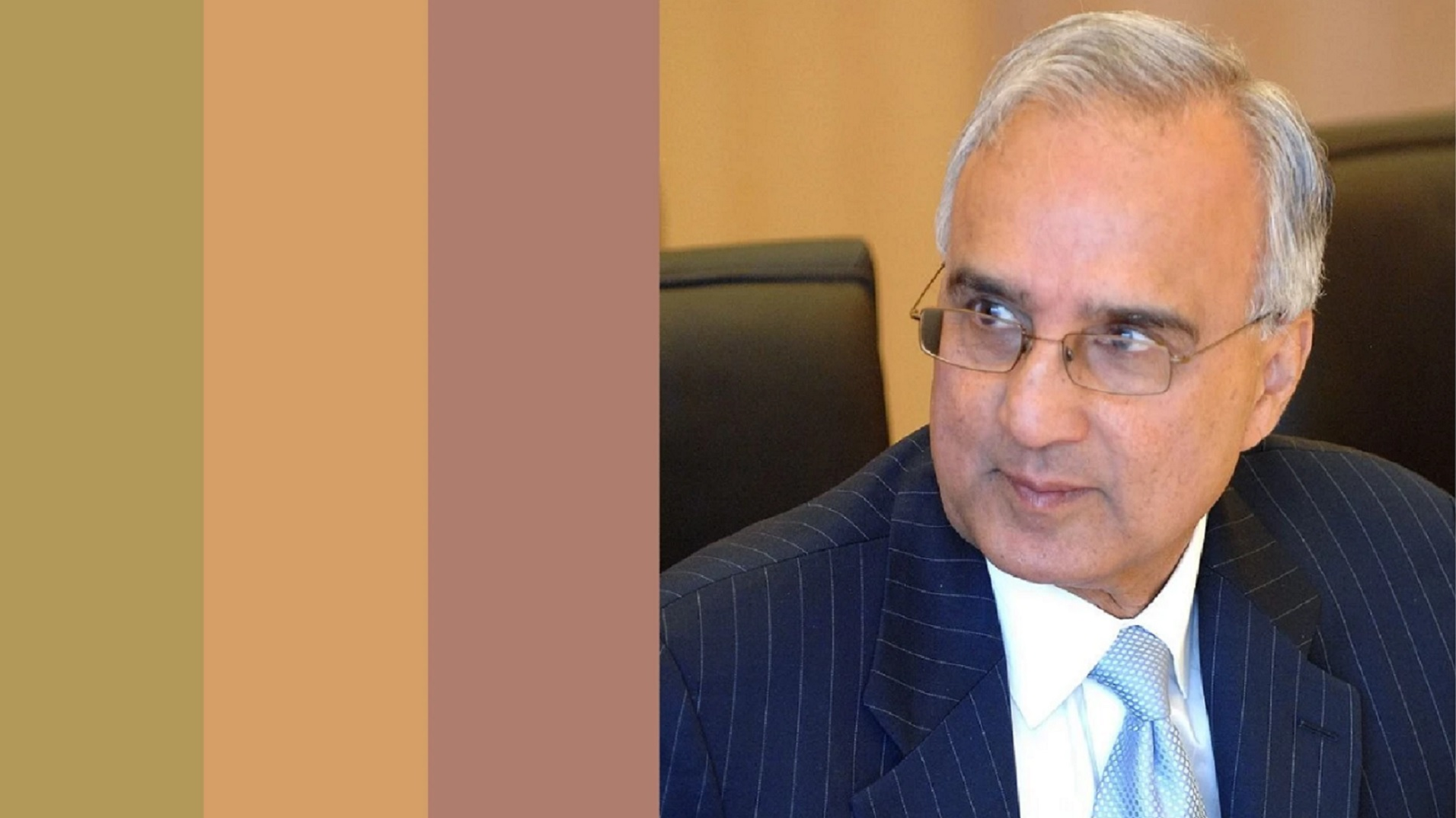
EDITORS’ NOTE: Dr. Azim Nanji has taught at several colleges, including Stanford University, and has has served as a member of the Steering Committee and Master Jury of the Aga Khan Award for Architecture, as Director of the Institute of Ismaili Studies (1998-2008), as a member of the Board of Trustees of the Aga Khan University (United Kingdom), and as a member of the Board of Directors of the Global Centre for Pluralism.
Published on The.Ismaili

Interview Summary
Mawlana Shah Karim clarified a common misunderstanding about pluralism, emphasizing that “connection does not necessarily mean agreement”. This interview with Dr. Azim Nanji — Member of the Board of Directors at the Global Centre for Pluralism (GCP) — explores the implications of this statement on intellectual diversity and value systems. There is a tendency to focus primarily on cultural, ethnic, and racial diversity while often overlooking intellectual diversity, which has contributed to increasing polarization in societies worldwide. The conversation examines why pluralism is often misunderstood as merely recognizing diversity, rather than actively learning to negotiate our intellectual differences constructively. A key insight from the discussion is that being pluralistic doesn’t mean accepting all values without judgment, but rather respecting individuals while still making value judgments about different moral positions. A significant portion of the interview examines the boundaries of pluralism, particularly how it differs from relativism, and the role of the Global Centre for Pluralism in fostering respect for diverse viewpoints through education and meaningful dialogue.
Interview Questions
1. I want to set some context for this interview. At the opening of the Global Centre for Pluralism in 2017, Mawlana Shah Karim clarified a misunderstanding about pluralism that I have not seen discussed or addressed deeply.
He said, quote, “Let me emphasize a point about the concept of pluralism that is sometimes misunderstood. Connection does not necessarily mean agreement.” I would like to discuss the implications of this on two aspects: intellectual diversity and value systems.
The Imam had championed pluralism for decades, and he wouldn’t draw attention to something, especially at the opening of the Global Centre, if it was just a small misunderstanding held by a few people. So first, as a member of the Board of Directors, why has this been misunderstood, and what has been misunderstood?
2. There’s cognitive diversity, intellectual diversity, and all these aspects, but oftentimes we focus on cultural diversity, ethnic diversity, and racial diversity. Why isn’t there that focus from the intelligentsia who are supposed to promote this?
And if Mawlana Shah Karim was saying (intellectual) pluralism has been misunderstood, how do we help people understand when everyone thinks they have the correct understanding of pluralism?
3. Looking at other institutions, they focus on respect for race, culture, ethnicities, bringing people together, but maybe not at fostering respect for different points of view — the intellectual diversity.
This lack of respect is causing polarization, pitting nations, families, communities against each other. Mawlana Shah Karim, on the contrary, had said: “What this means is perhaps above all the readiness to participate in a true dialogue with diversity, but that takes work and patience. Above all, it implies a readiness to listen.” He had quoted former Governor General of Canada Adrienne Clarkson’s remarks, that – ‘…is a readiness to listen to your neighbor, even when you may not particularly like him.’” And then he emphasized: “Is that message clear? You listen to people you don’t like.”
What can we do, what should we do, and what is the GCP doing to help people become more respectful of other points of view and truly engage with diversity?
4. I want to shift our conversation to pluralism and value systems.
There’s confusion here – people think being pluralistic means being inclusive of all choices. But this interpretation of pluralism feels like license or uncontrolled freedom, where everything is blanketly accepted, legitimized, and validated, in the name of pluralism. Mawlana Shah Karim was clear that while we have our values, we do not ask others to share all of them, and we make value judgments. He championed pluralism while also rejecting values that did not align with his principles.
Why did he maintain both positions? How can we help people reconcile this?
5. Returning to how Mawlana Shah Karim guided us – he was noting that we’re inclusive of all people, and everybody deserves respect, dignity, and the sanctity of life. But we won’t be inclusive of all values and morals, as you mentioned regarding relativism. He was separating the person from the value that person may hold, which prevents pluralism from becoming license.
6. Would you say there are limits to pluralism?
7. Mawlana Shah Karim had stated that one of the greatest stumbling blocks to the advance of pluralism is simply human arrogance, and arrogance is a state of mind – an intellectual dimension.
So if we’re going to make the world more pluralistic, more intellectually diverse, prioritizing intellectual diversity, respecting other positions and opinions rather than assuming our position is better (within limits of values and ethics), how do we move forward?
8. On a separate note, we wanted to get your perspective briefly on how pluralism has or has not been part of Muslim history. We know that diversity of traditions and interpretations of the faith has always existed, but it seems that in recent decades, there has been a heightened rejection of this concept from more radical groups, as we can see in many parts of the Muslim world.
9. Lastly, looking at the global Jamat, we know that for almost two centuries, it has been Khoja-centric, in terms of population, tariqa practices, and in institutional management. In the last two decades, we have had greater visibility into the Syrian and Central Asian Jamats, who are also migrating to the West. While the institutions are working to integrate them and respect their traditions, what more should be done to understand their cultures and to ensure pluralism, in all its facets, becomes intrinsic to the ideal of “One Global Jamat”?
About Azim Nanji
Dr Azim Nanji, originally from Kenya, received his doctorate in Islamic Studies at McGill University and has taught at several colleges, including Stanford University. He has served as a member of the Steering Committee and Master Jury of the Aga Khan Award for Architecture, as Director of the Institute of Ismaili Studies, a task force member for the Institute for the Study of Muslim Civilizations, and as a member of the Board of Directors of the Global Centre for Pluralism.